Spectrum News: Local Stories
- 4.1
- Rating
- 1.00M
- Installs
- Free
- Price

 Analysis by App-foxy
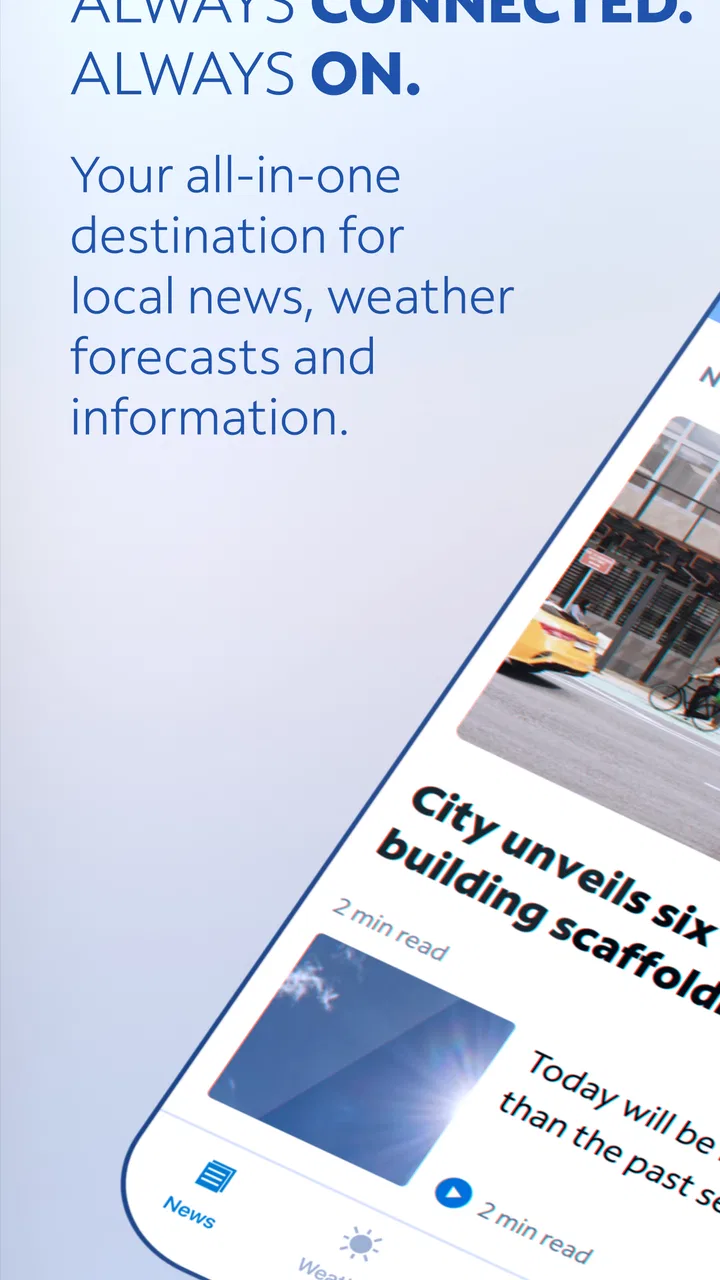
I use Spectrum News: Local Stories as a quick way to understand what is happening close to home without sorting through a national news feed first. It is a free News & Magazines app from Charter/Spectrum, built around local reporting, live coverage, weather forecasts, radar, and daily updates. That focus makes it feel more practical than a general headline reader when I need a nearby answer rather than a broad summary.
The app is not trying to replace every news source on my phone. Its real value is narrower and more useful: it gives local events, weather conditions, and developing coverage a central place. I found it most helpful during ordinary moments when I wanted context quickly, such as checking the forecast before leaving, scanning local headlines during breakfast, or following an unfolding story without repeatedly searching the web.
How I use Spectrum News: Local Stories day to day
I use this section to focus on the small choices that make a local-news routine useful rather than noisy: when I check headlines, how I decide which updates deserve a closer look, and when I switch to radar for a practical decision. The goal is to make each visit purposeful, so the next section can look at how that routine fits beside broader news and weather sources.
You May Also Like

 Blood Strike: 2.5 Anniversary
Blood Strike’s Loadouts Turn Every Drop Into a Tactical Gamble
A close look at Blood Strike’s custom loadouts: how fast access to signature weapons reshapes its battle royale rhythm, rewards preparation, and narrows the gap between fights.

 Pandora - Music & Podcasts
Pandora’s Music Is Easy to Start, but Harder to Recover
Pandora’s strength is its low-effort path from a seed to a station. Its weak spot is how much confidence it asks you to place in connection, setup, and quiet recovery.

 8 Ball Pool
 Is Built on Rivalries, Rematches, and Routine
A close look at the rivalries, rematches, shared routines, and unanswered safety questions that turn a quick pool match into a persistent mobile community.

 Samsung Music
’s Quiet Strength Is Playing What You Already Own
Its reach comes less from spectacle than from dependable access to a personal library. That simplicity is both the app’s strongest retention engine and its ceiling.

 AccuWeather: Weather Radar
AccuWeather Review: A Quick, Clear Forecast for Everyday Decisions
For everyday plans, the best forecast is the one you can understand quickly. AccuWeather makes rain timing, radar, and local conditions easy to act on, with a few trade-offs.

 Hill Climb Racing
Why Hill Climb Racing Still Turns Crashes Into One More Run
A tiny car, a bumpy hill and one more upgrade: Hill Climb Racing keeps resurfacing because its simple chaos makes every near-miss feel personal.
More From Our News Desk



A simple local-news routine
My baseline workflow starts with the local headlines rather than the weather screen. I scan the main stories first, open only the items that affect my area or plans, and then move to the forecast or radar when I need a practical decision. This keeps the app from becoming a stream of headlines that I read without remembering.
The distinction matters because local news is often useful in small pieces. A road problem, school-related update, public safety story, or change in local conditions may not deserve a long reading session, but it can still affect the next hour of my day. I treat the app as a briefing tool: identify what is relevant, read enough to understand the situation, and leave when I have the information I need.
For example, before commuting, I can check the daily updates and then look at the weather radar instead of opening a separate weather service immediately. If rain is moving toward my area, the radar gives me a more useful visual sense of timing than a single temperature number. I still make my own judgment about travel, but the combination of local coverage and weather information reduces the need to jump between several apps.
Where it fits beside other news apps
Compared with a national news aggregator, this app feels less overwhelming and more geographically relevant. Aggregators are better when I want a wide selection of publishers or a rapid overview of international and national stories. Spectrum News is the better first stop when the question begins with “What is happening around me?” rather than “What is happening everywhere?”
It also differs from a dedicated weather app. A weather specialist may offer deeper forecasting tools, while this app puts weather alongside local reporting. That arrangement is convenient for everyday checking, but users who need highly detailed meteorological information may prefer a separate weather service as their main tool.
In the same way, a social network can surface breaking local information faster, but it can also mix useful updates with speculation, repetition, and unclear sourcing. I prefer using Spectrum News for an initial, organized look at a story and social platforms only as a secondary way to notice what people are discussing. That habit helps me avoid treating the loudest post as the most reliable explanation.
What the app feels like in regular use
The overall experience is straightforward. The app’s purpose is easy to understand, and I do not need to build a complicated system before getting value from it. The local focus is the main advantage, especially for readers who find broad news feeds distracting or who want a familiar regional perspective during a busy day.
That simplicity has a trade-off. I would not choose it as my only source for every subject, because a local-news app naturally gives less breadth than a full news reader. When I want deep national analysis, specialist reporting, or several viewpoints on a major story, I reach for other sources. Spectrum News works best as the local layer in my routine, not as a complete replacement for the rest of my reading.
Settings and habits worth checking
I recommend spending a moment confirming the location and local area the app is using. Local relevance is the whole reason to install it, so an incorrect region can make the experience feel disappointing even when the app itself is working normally. I also check notification choices rather than accepting every alert automatically. A useful local alert should help me act or pay attention; too many interruptions make me ignore the important ones.
My preferred approach is to keep alerts limited to the kinds of updates I genuinely want during the day, then open the app deliberately for routine reading. This creates a useful separation between urgent information and background news. If every headline arrives as an interruption, the app becomes noisy. If alerts are selective, the app can remain quiet until I choose to catch up.
Weather information deserves its own place in that routine. I use the forecast for the broad plan and the radar for short-term decisions, such as whether to delay a walk or take another route. The radar is not a promise about exactly what will happen at my front door, so I treat it as a moving picture of conditions rather than a perfect countdown. That small distinction prevents me from reading more precision into the display than it can reasonably provide.
Another useful habit is checking the time of an update before assuming that a story reflects the current situation. Developing local events can change quickly, and an earlier article may still appear relevant after new details emerge. I open the story instead of relying only on the headline, especially when the subject involves travel, public safety, or changing weather.
How I make the app faster to use
Experienced use is less about hidden tricks and more about repeating a sensible sequence. I start with the local story list, identify one or two items that could change my plans, and then use weather tools only when they answer a specific question. This avoids wandering through every section simply because it is available.
I also separate “read now” from “remember for later.” A breaking update that affects my commute deserves immediate attention. A general community story can wait for a quieter moment. That decision makes the app feel faster because I am not asking every article to compete for the same amount of attention.
When following a developing story, I return to the app through the same local-news path instead of searching for the headline from scratch each time. This is a small workflow improvement, but it makes repeated checking less frustrating. I look for what has changed rather than rereading the entire story as if it were new.
A practical shortcut is to connect the app with a daily routine rather than opening it randomly. I might check it with breakfast, once before leaving home, and again when a notification points to something genuinely relevant. The exact schedule is personal, but the principle is useful: predictable checks are calmer and usually more productive than constant refreshing.
Using it during weather and local events
The strongest everyday use case is the overlap between local reporting and weather. Suppose I am planning an outdoor appointment and the forecast looks uncertain. I can read the local updates for broader context, inspect the radar for approaching conditions, and decide whether I need extra travel time or a backup plan. No single screen makes the decision for me, but the information is gathered in one place.
During a local event, I use the app differently. I am less interested in reading every article and more interested in spotting changes that could affect movement, timing, or safety. I check the latest update, compare it with the weather view, and avoid relying on an old headline when conditions are changing. This is a more disciplined use than endlessly scrolling, and it is where the app’s local emphasis feels most practical.
The same workflow can help someone who does not follow local news closely. Rather than trying to become an expert on every issue, that person can use the app as a short daily briefing. Read the lead items, open the stories connected to personal plans, and leave the rest for another day. The result is manageable and less demanding than a general-purpose news application filled with unrelated topics.
Where the experience has limits
The first limitation is scope. Readers who want a large range of national, international, business, technology, or specialist coverage may find the app too focused. Its local orientation is a strength when geography matters, but it can feel narrow when I am looking for variety.
The second is that local information can require patience. A developing story may change after I read it, and a headline may not contain enough detail for a confident conclusion. I make a point of opening the full item and checking for newer context before sharing it or changing plans. That is not a flaw unique to this app, but the consequences of local misinformation can feel immediate, so careful reading matters.
The weather tools are useful companions to the news experience, yet they do not turn the app into a specialist forecasting workstation. If I need detailed planning for a long trip, outdoor work, or conditions where small changes matter, I would compare the information with a dedicated weather source. Spectrum News is convenient for a quick local check; it is not the only tool I would trust for every weather decision.
There is also a personal attention trade-off. News notifications can make the app feel current, but frequent alerts may interrupt concentration. I would skip the app, or at least disable most notifications, if I know that headline alerts make me anxious or pull me into repeated checking. A calmer reader may get more value from opening it once or twice a day on their own terms.
Who should install it
I think Spectrum News: Local Stories is a good fit for people who care about nearby events but do not want to assemble information from several sources. It is especially useful for residents who want local headlines and weather in the same routine, commuters who need a quick regional check, and readers who find national feeds too broad to be useful before work.
It is also a sensible choice for someone who prefers a free app and wants to try a local-news workflow without making a purchase. The app is free, has an Everyone 10+ content rating, and is available on Android devices running version 7.0 or later. Those details make it accessible to many users, although the age rating is still worth considering for families deciding what children should read without supervision.
I would skip it as a primary news app if my main goal is deep analysis, a wide selection of publications, or highly specialized weather information. In those cases, a broad news reader or dedicated weather application will probably serve better. I would also avoid making it my only source during a major event; comparing important information with official local notices and other reputable reporting is a more responsible approach.
What its adoption and history suggest
The app has been available since December 9, 2013, and its current version is 2.49. That long presence gives it the feel of an established local-news product rather than a temporary headline experiment. Charter/Spectrum is the developer, and the app has passed the one-million-install mark on Android, with a 4.1 average from around 7,100 ratings and about 2,300 written reviews.
I do not treat those figures as proof that it will suit everyone, but they do indicate that the app has found a substantial audience. More important to me is whether its focused workflow matches my needs. A well-rated local app can still be the wrong choice for someone seeking global coverage, while a simple regional briefing can be exactly right for someone who wants less noise.
My verdict after building a repeatable routine
My experience with Spectrum News: Local Stories is positive because I use it for a clear job: local awareness, quick weather context, and updates that may affect my immediate plans. The app rewards a focused routine more than constant browsing. Check the local stories, verify the timing, use radar for short-term context, and adjust notifications so the app supports the day instead of interrupting it.
The most important trade-off is also the easiest to understand. This is a strong local briefing tool, not an all-purpose news replacement. Its value comes from relevance and convenience, while its limits appear when I want broad coverage, deep reporting, or specialist forecasting. Used alongside those alternatives, it becomes more useful rather than less.
For readers who want a free way to keep up with nearby stories and daily conditions, I would recommend giving it a try. I would begin with restrained notifications and a short morning check, then add radar when weather affects a plan. That approach shows the app at its best: not as another feed to consume endlessly, but as a practical local companion that helps me decide what deserves attention today.
FAQs for Spectrum News: Local Stories
01What is Spectrum News: Local Stories and what does it offer?
Spectrum News: Local Stories is a news app designed to keep you informed about local events, weather, and stories that matter most to your community. It offers personalized news feeds, live updates, and video content tailored to your interests and location, making it an essential tool for staying connected with your surroundings.
02Is Spectrum News free to use, or does it require a subscription?
Spectrum News: Local Stories offers a free version that provides access to a wide range of local news stories and updates. However, to access premium features such as ad-free browsing and exclusive content, users may need to subscribe to a paid plan. Check the app store for detailed pricing information.
03What platforms is Spectrum News available on, and how do I download it?
Spectrum News: Local Stories is available on both Android and iOS platforms. You can download it directly from the Google Play Store for Android devices or the Apple App Store for iPhones and iPads. Simply search for ‘Spectrum News’ and click install to get started with your local news updates.
04How does Spectrum News ensure the accuracy and relevance of its content?
Spectrum News employs a team of professional journalists and collaborates with local news outlets to provide accurate and timely information. The app uses algorithms to personalize content based on user preferences and location, ensuring that you receive the most relevant and trustworthy news updates.
05Can I customize the type of news and alerts I receive from Spectrum News?
Yes, Spectrum News allows users to customize their news feed and alerts. You can select preferred topics, set up notifications for breaking news, and choose the types of stories you want to see more often. This ensures a personalized experience that keeps you informed about what matters most to you.
Pros
- User-friendly interface for easy navigation.
- Real-time local news updates.
- Customizable news feed options.
- High-quality video content available.
- Minimal ads for uninterrupted reading.
Cons
- Limited international news coverage.
- Occasional app crashes reported.
- No offline reading mode available.
- Requires account for personalized features.
- Push notifications can be overwhelming.

Spectrum News: Local Stories
Gallery